Uncommon Woods – Would wood be a fruit?
Woodcarving workshop
with Diogo Amaro and Madalena Vieira
17–19.04.2025
Topolò/Topolove
Would wood be a fruit?
Footnotes to Uncommon Woods
Antônio Frederico Lasalvia
Of all of the fruits that fruit trees bear, wood is perhaps the most uncommon. Although lumber is available all year round, it is much harder to harvest than cherries or chestnuts – not to mention that, unlike other yields, timber is not a very agreeable thing to taste. Or is it?
As the Uncommon Fruits project ripes, I find it charming how much of its sense is tied to an incidental event: the discovery of a fallen wild cherry tree in the Spring of 2024. Suzanne has written beautifully about it, and the poetics of her description also find expression in the title, as she calls her text “Breath of a fallen cloud.”
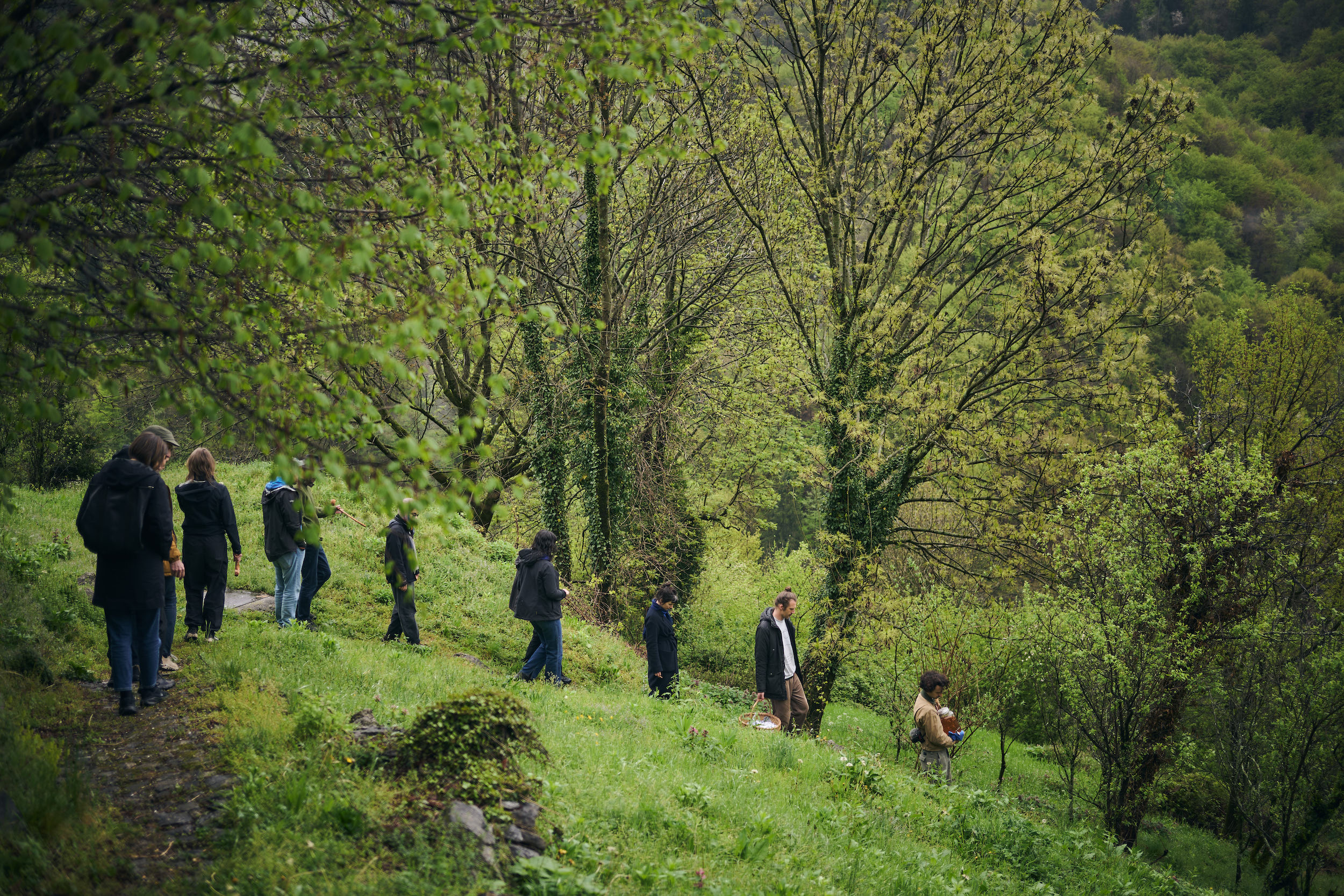
Four seasons later, we are back at the site of the fallen cloud only to find that its spray has dissipated. As the tree passed away sometime last winter, its blossoms are not to be renewed this spring. Rather than a sad thing, this inevitable stage in the cycle of a tree’s life presents us with yet another opportunity. If in the past we have tasted the flowers and fruits grown by this plant, we are now gifted with an abundant harvest of its wood.
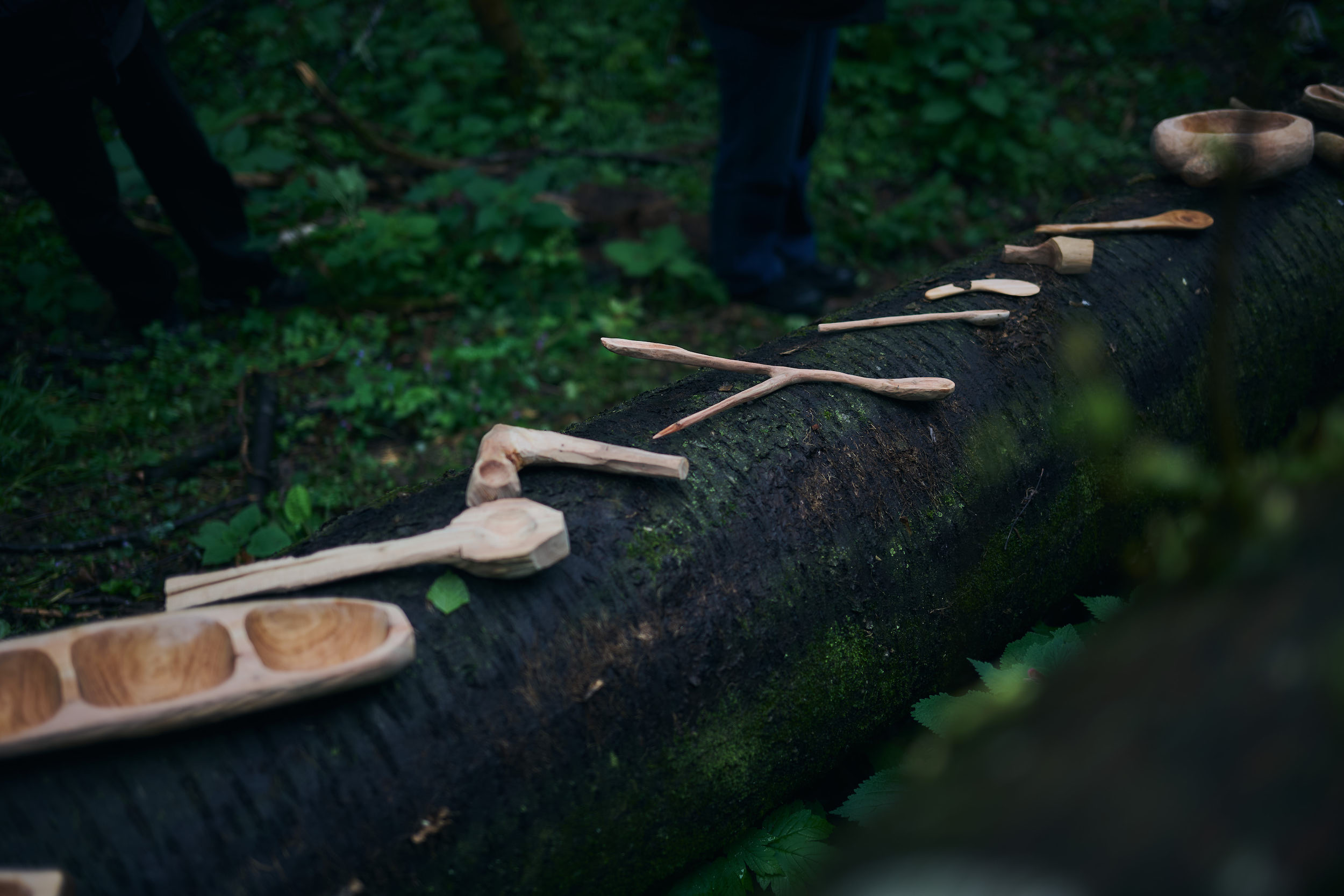
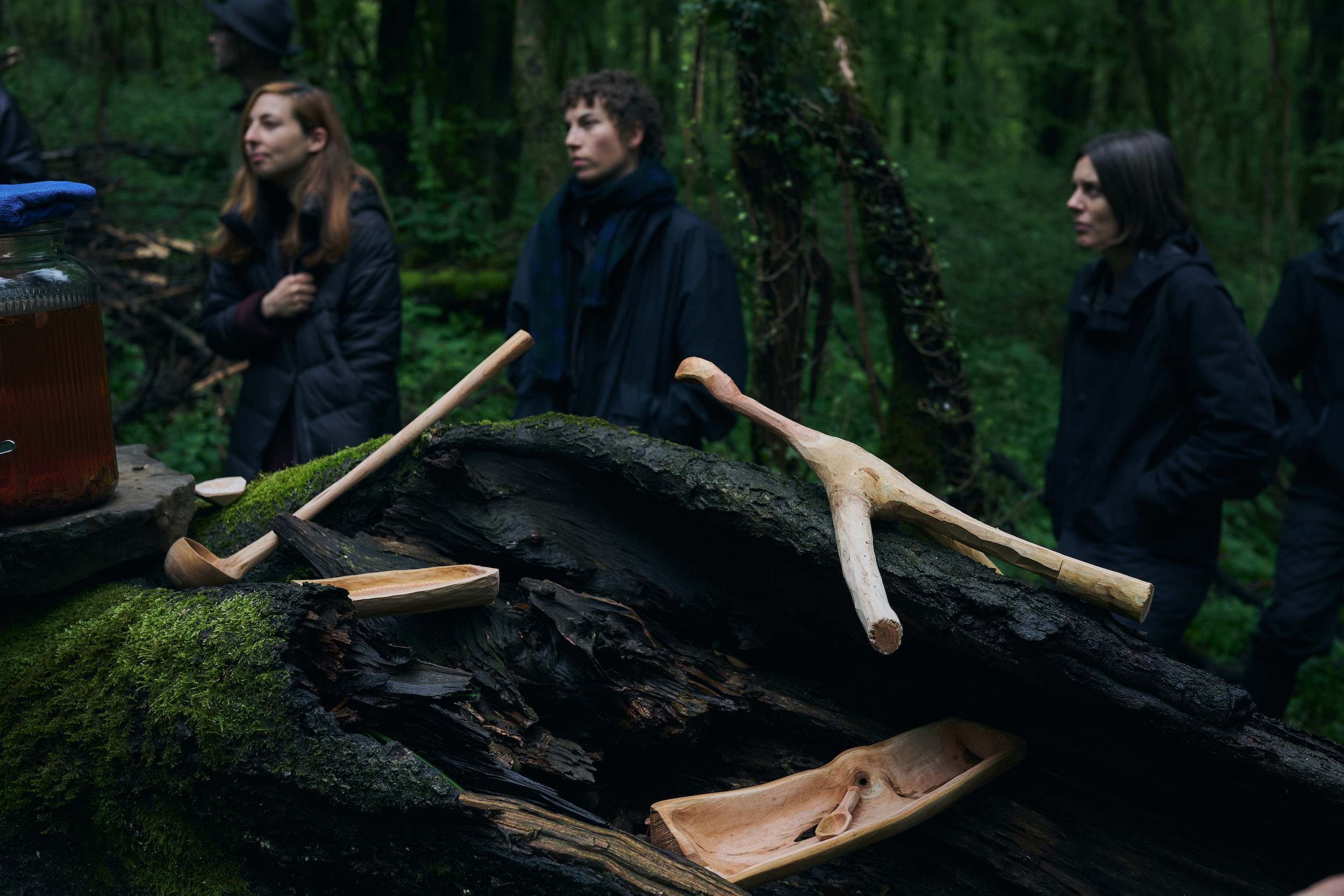
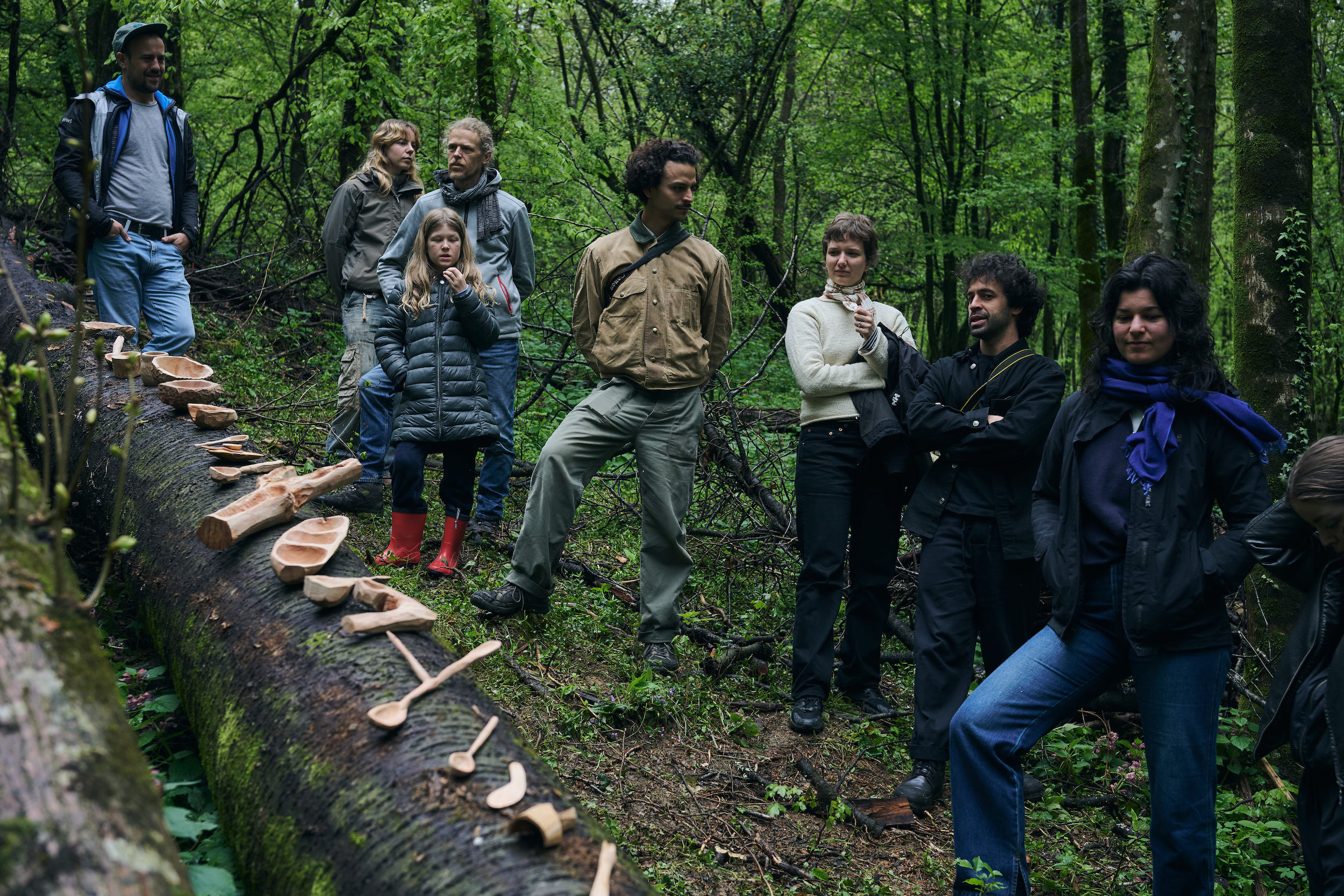
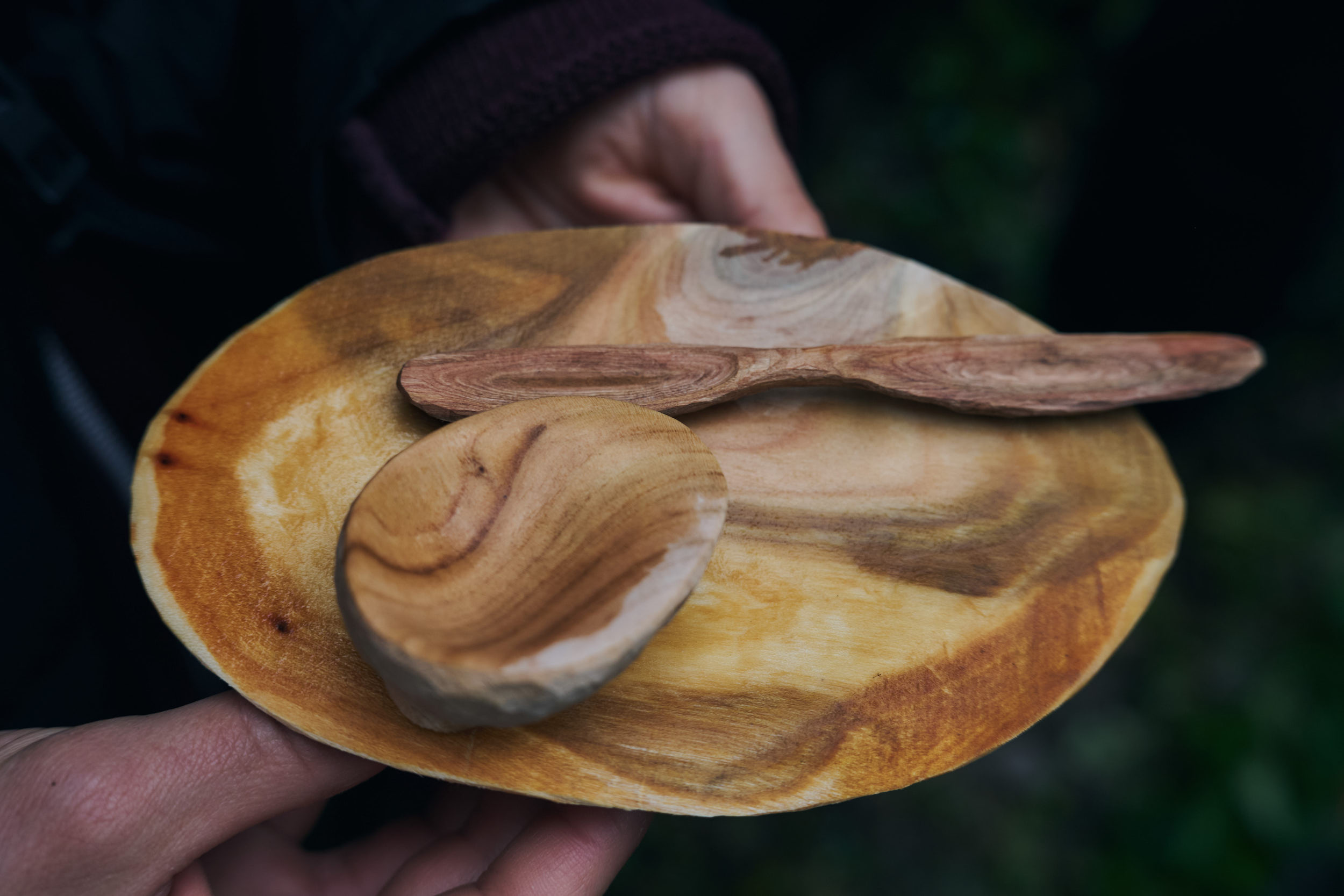
By using the tree to taste the recipes inspired by it, its afterlife is not only a rhetorical allusion, but also a material presence to be physically felt. And so we decided to carve different vessels – spoons, bowls and other utensils – in order to better incorporate what was once a fallen cloud.
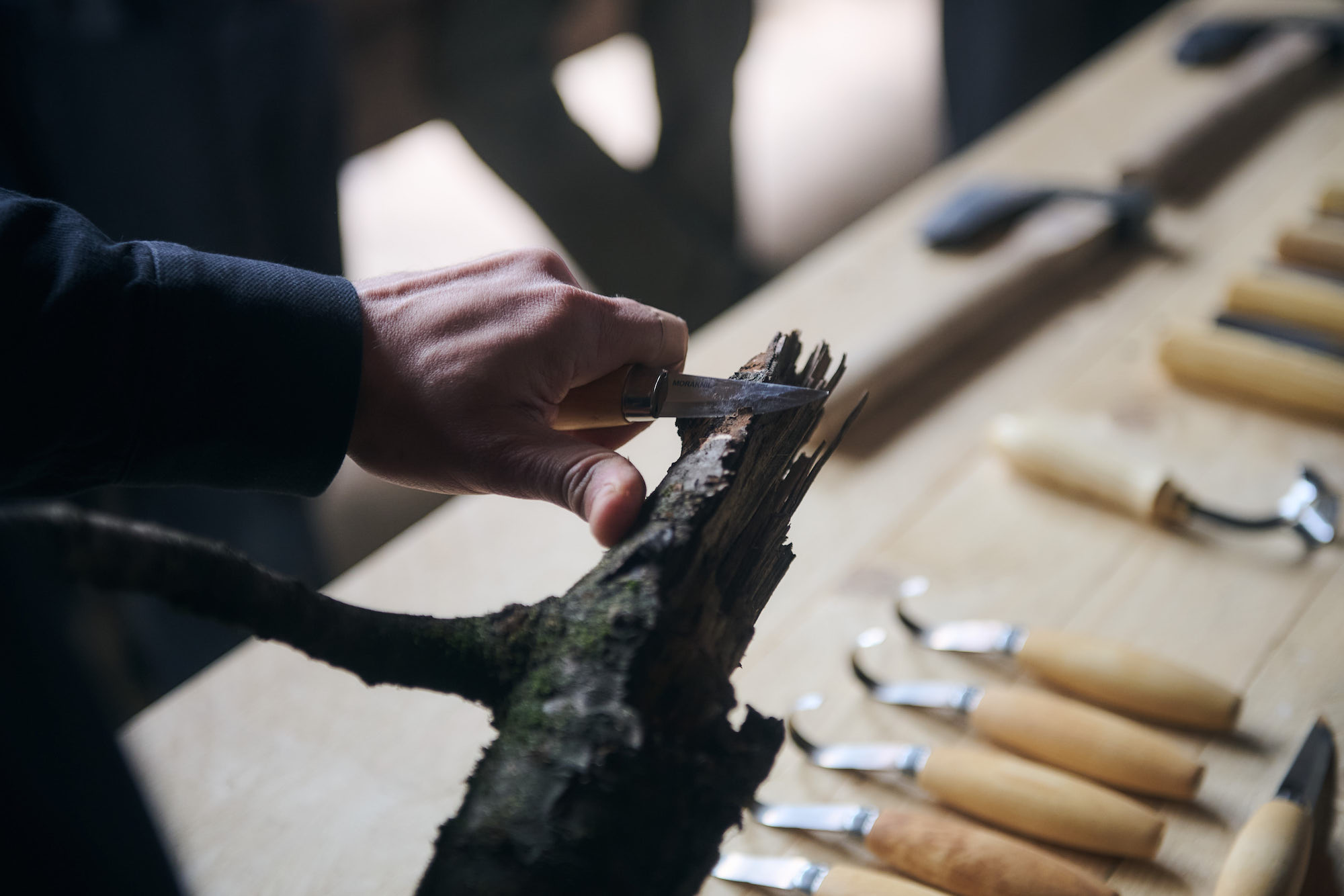
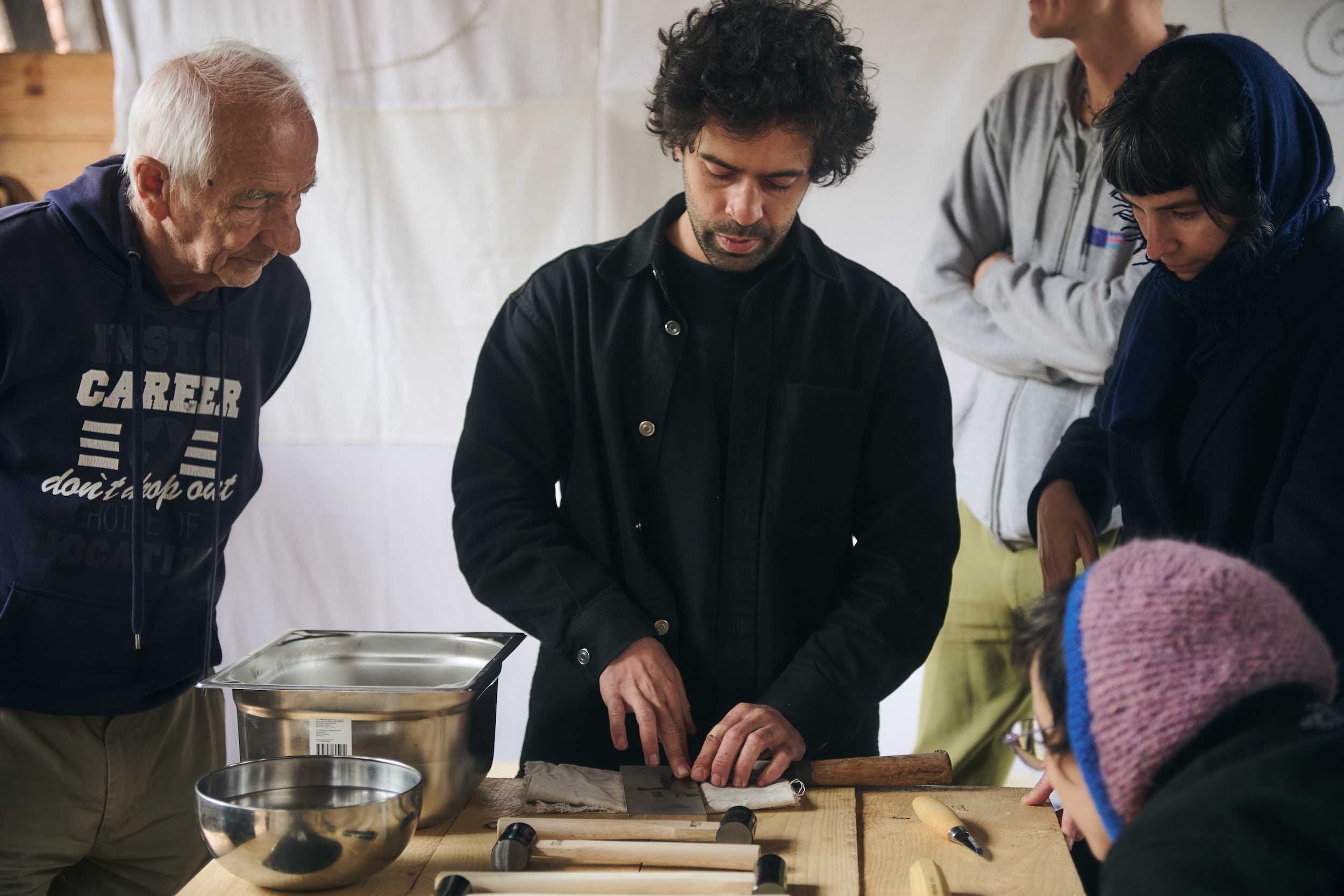
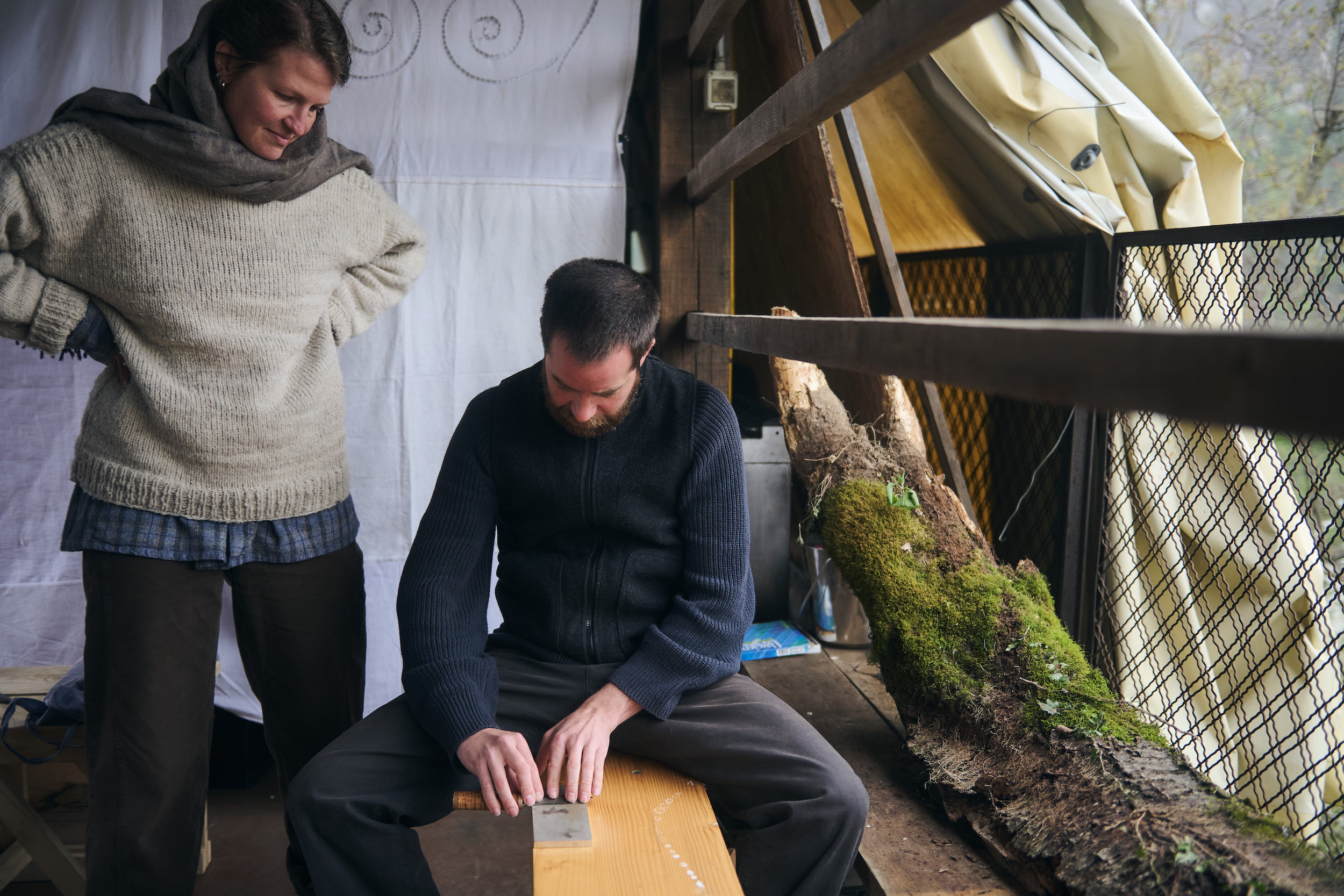
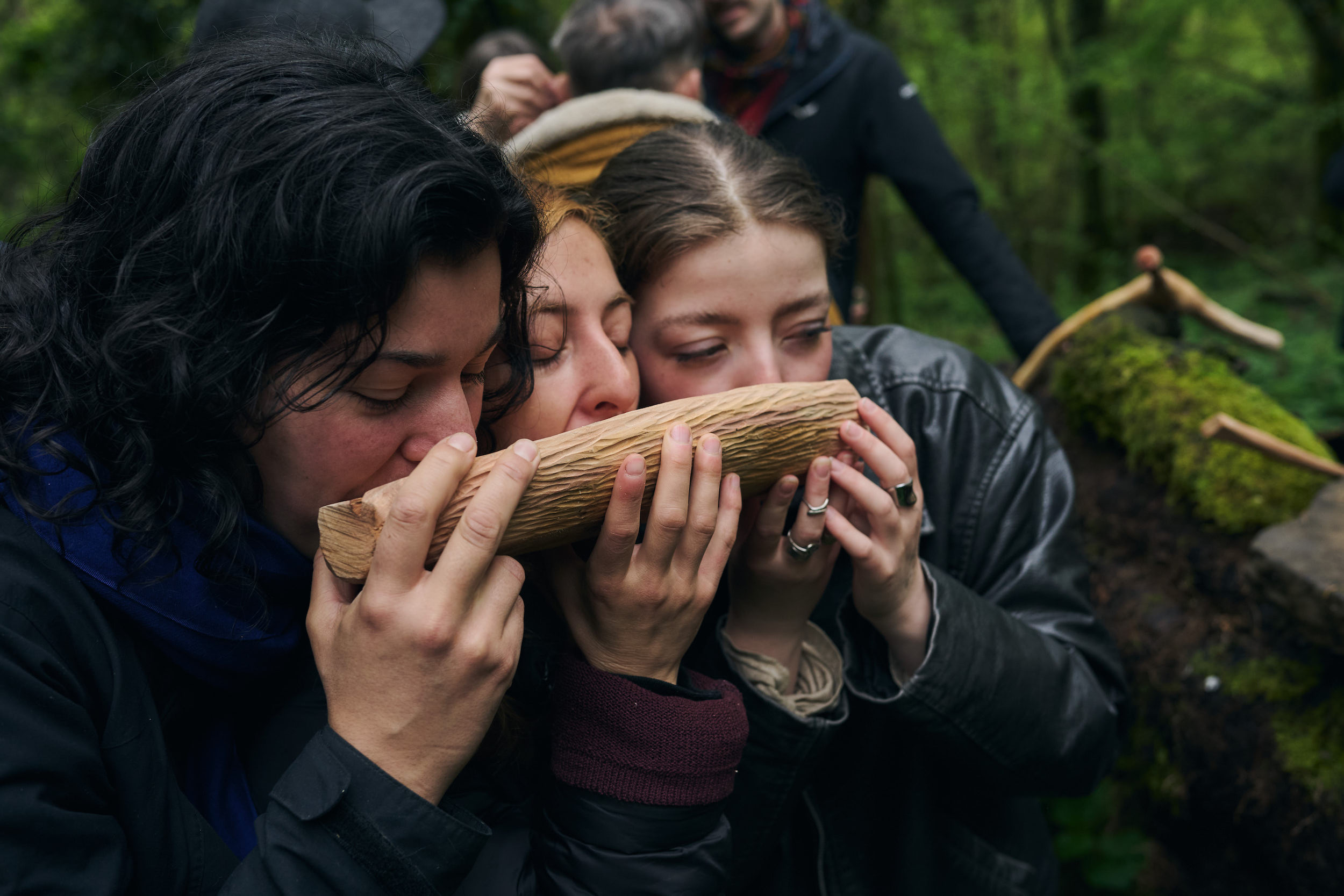
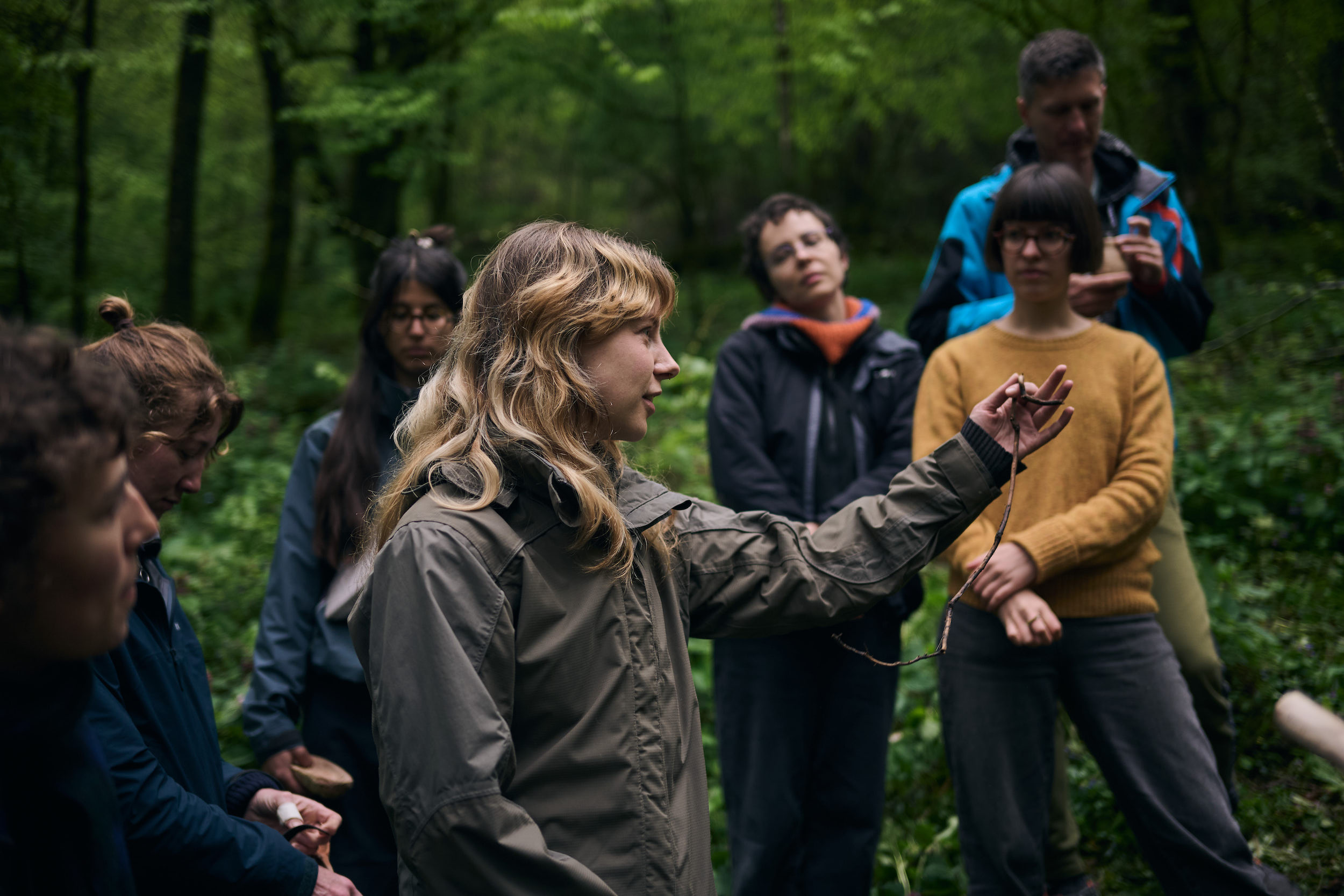
Diogo and Madalena guided us through their craft. For three days, hatchets bit into bark, hammers stroke gauges and knives sliced off small chips of wood. Although our hands were constantly touching things, my memory of this time is tied to other two senses: smell and hearing. The atmosphere of us working together was filled with the fragrant scent of green cherrywood, which reverberated with the continual percussion of tools at work.
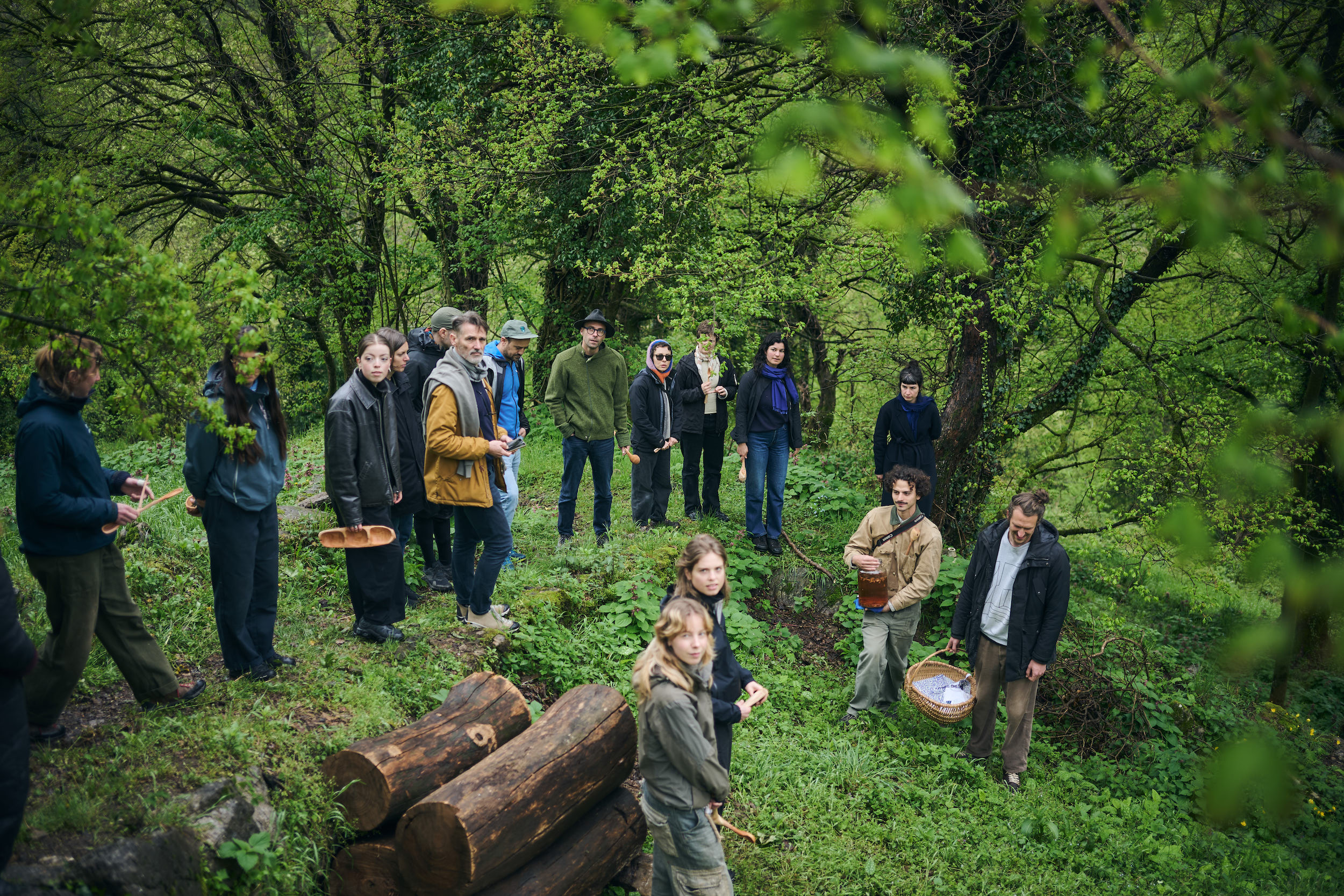
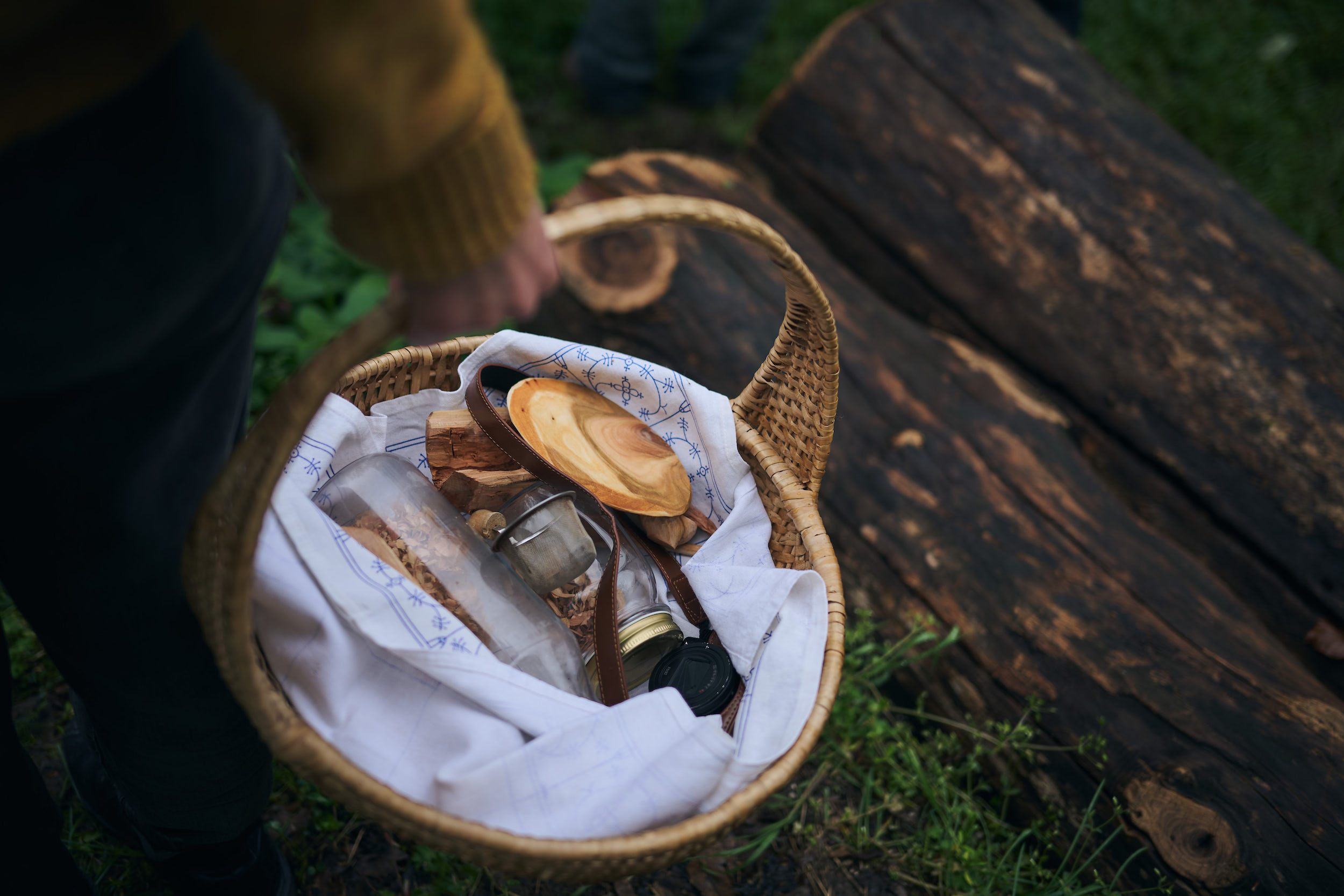
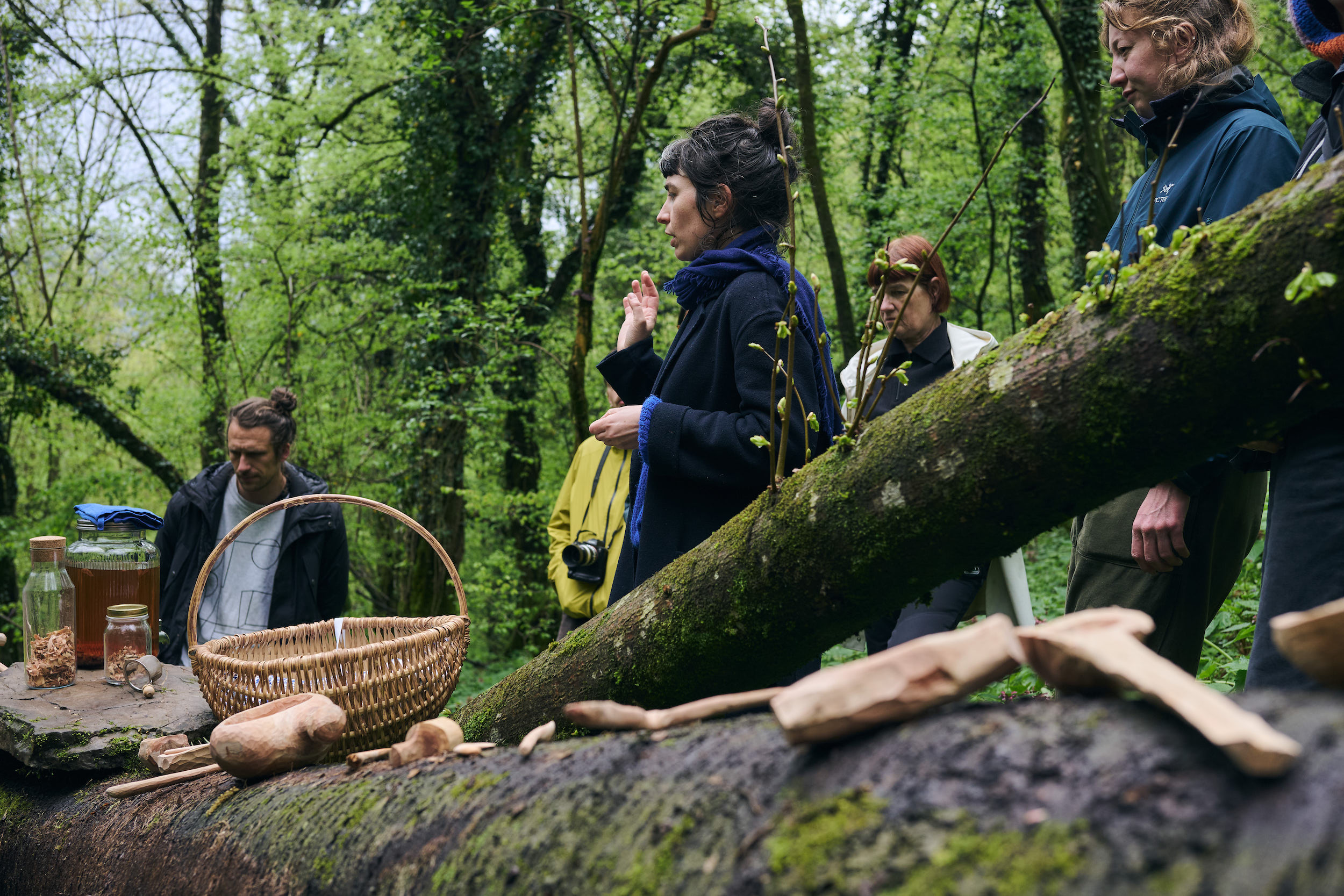
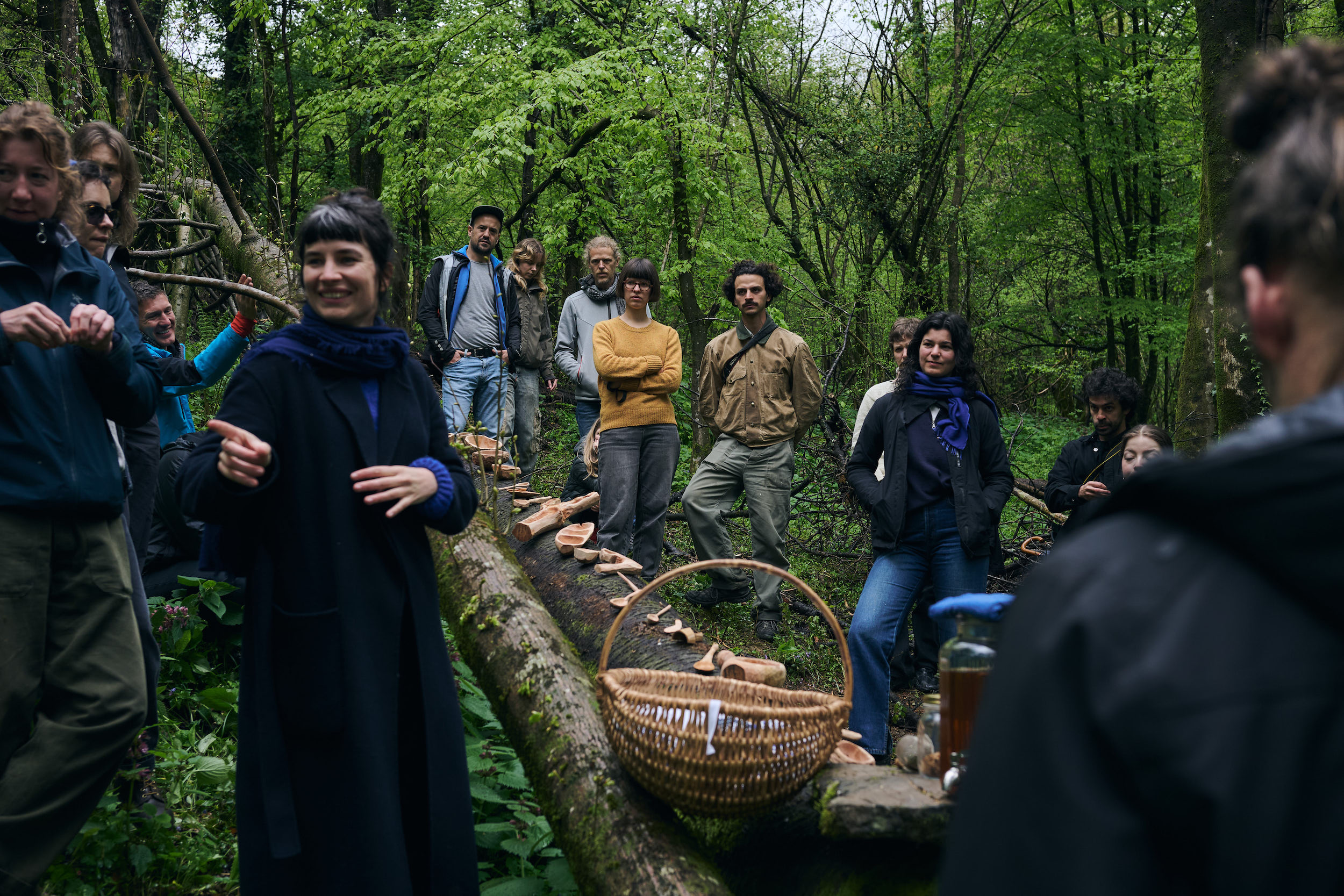
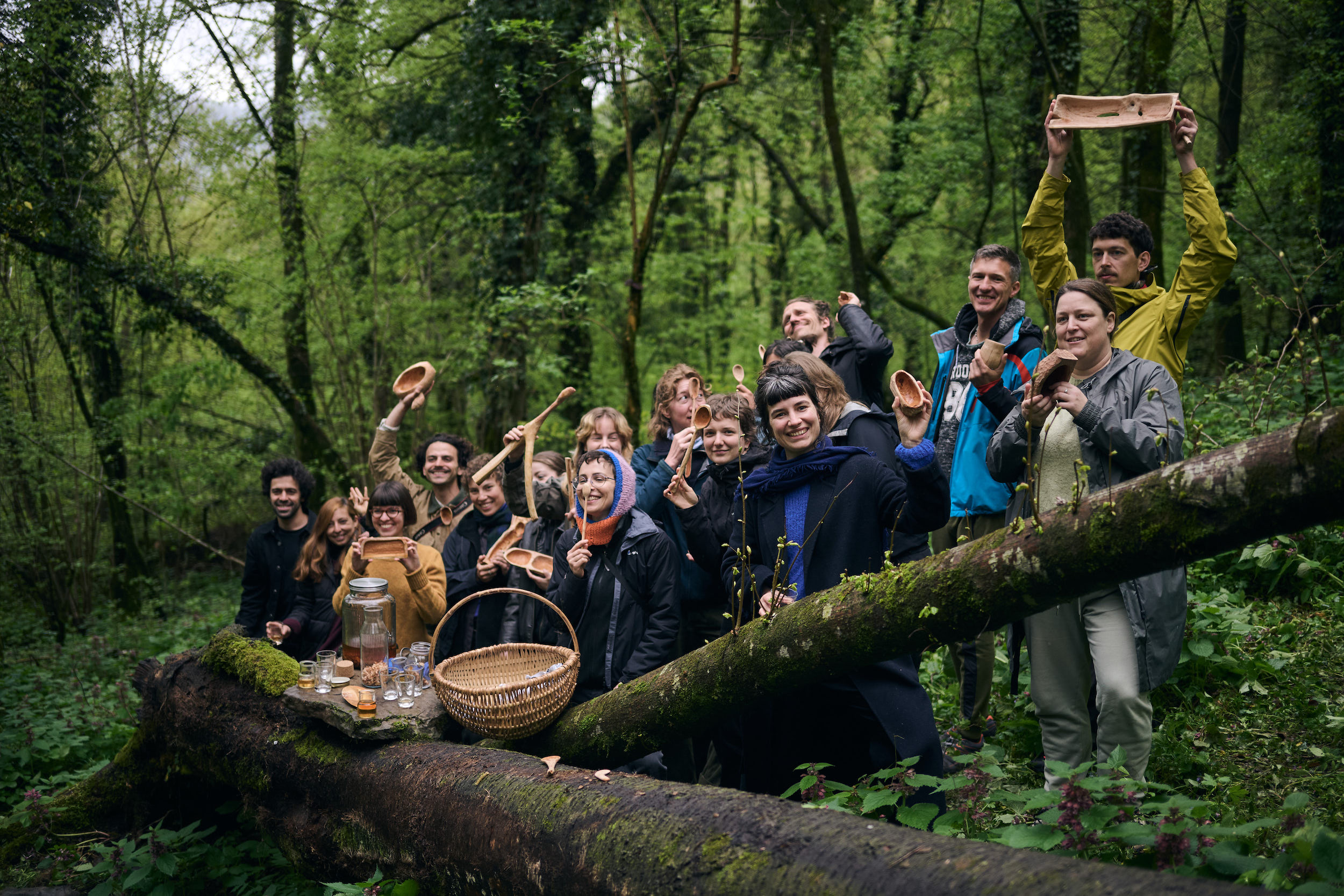
By the end of it, the experience of working with this tree was complemented by yet another sense, as we got a taste of the wood itself. Phillip and Suzanne prepared a tea made from roasted cherry-wood chips, freshly gathered at the participant’s workbenches during the workshop. This beverage was served in the forest, by the fallen cherry, in vessels made from the wood collected there.
As we stood by the tree and drank the tree’s tea from containers made out of that very tree, I could not help but think that we ourselves were becoming tree-like. We warmly welcomed the movements and transformations around us as we stood among others with ease and lost all sense of time. With this tender thought, I said to myself: wood is indeed very fruitful.
The photos of the workshop are by Jana Jocif. Hvala!